Creamy Gochujang Udon Noodles Recipe
Introduction
Creamy Gochujang Udon Noodles combine rich, spicy Korean flavors with smooth, comforting cream. This easy-to-make dish offers a perfect balance of heat and creaminess that will satisfy your craving for something bold and delicious.
Ingredients
- 2 packs frozen udon noodles
- 3 tbsp unsalted butter
- 3 cloves garlic, minced
- 2 shallots, chopped
- 1 1/2 tbsp gochujang
- 1/2 cup heavy cream
- 1/2 cup reserved noodle water
- 2 tsp soy sauce
- 1 tsp gochugaru
- 1 green onion, chopped (for garnish)
- Grated parmesan cheese
- Egg yolk (optional)
Instructions
- Step 1: Bring a pot of water to a boil and cook the frozen udon noodles according to the package instructions. When done, reserve 1/2 cup of the noodle water and set it aside. Drain the noodles, rinse under cold water, and set them aside.
- Step 2: In a pan, melt the butter over medium heat. Add the minced garlic and chopped shallots, then sauté until fragrant.
- Step 3: Stir in the gochujang and cook for about 30 seconds to release its flavor.
- Step 4: Slowly pour in the heavy cream and reserved noodle water. Add the soy sauce and gochugaru, then mix well and bring the sauce to a simmer. Let it simmer for a few minutes until thickened.
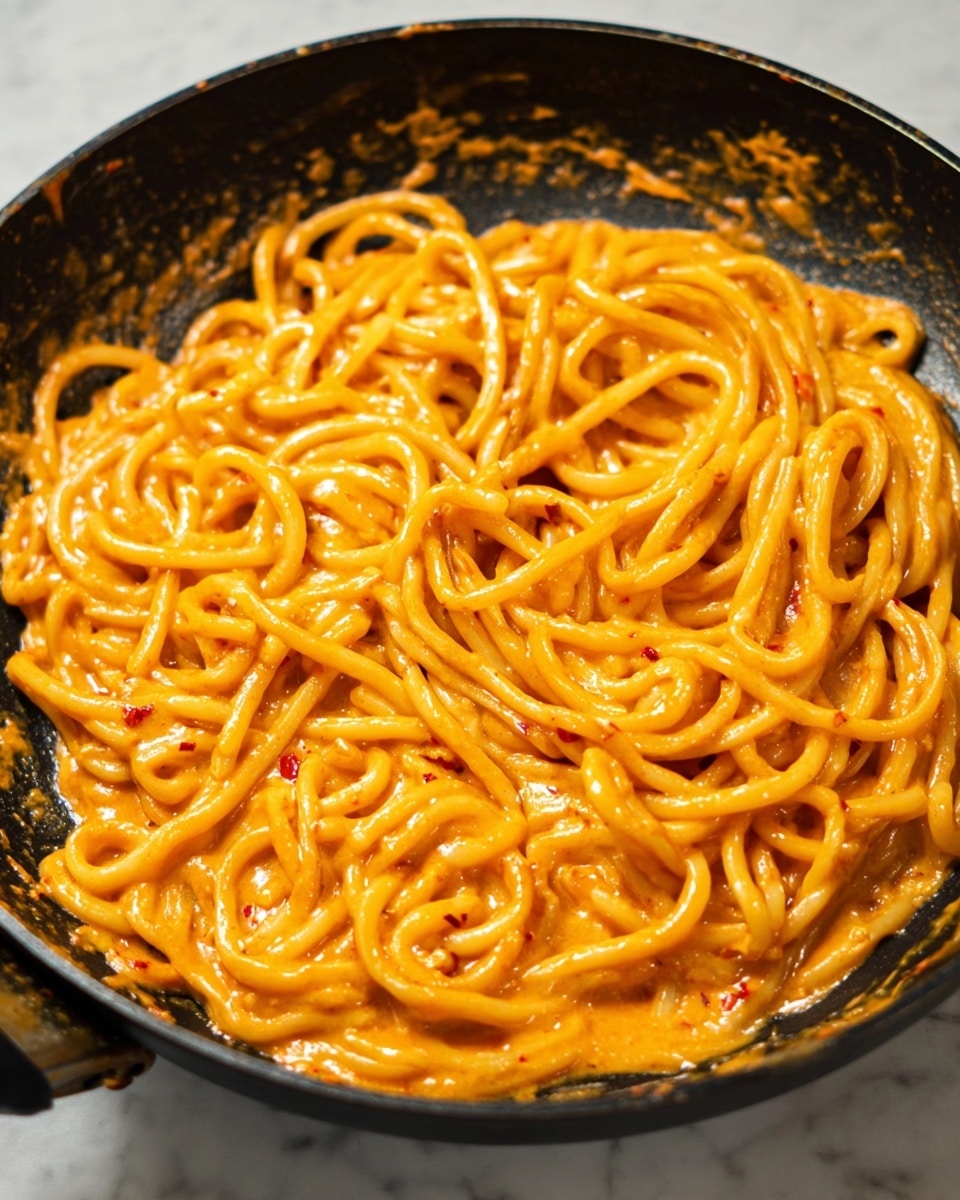
- Step 5: Add the cooked udon noodles to the pan and toss thoroughly to coat them evenly with the creamy gochujang sauce.
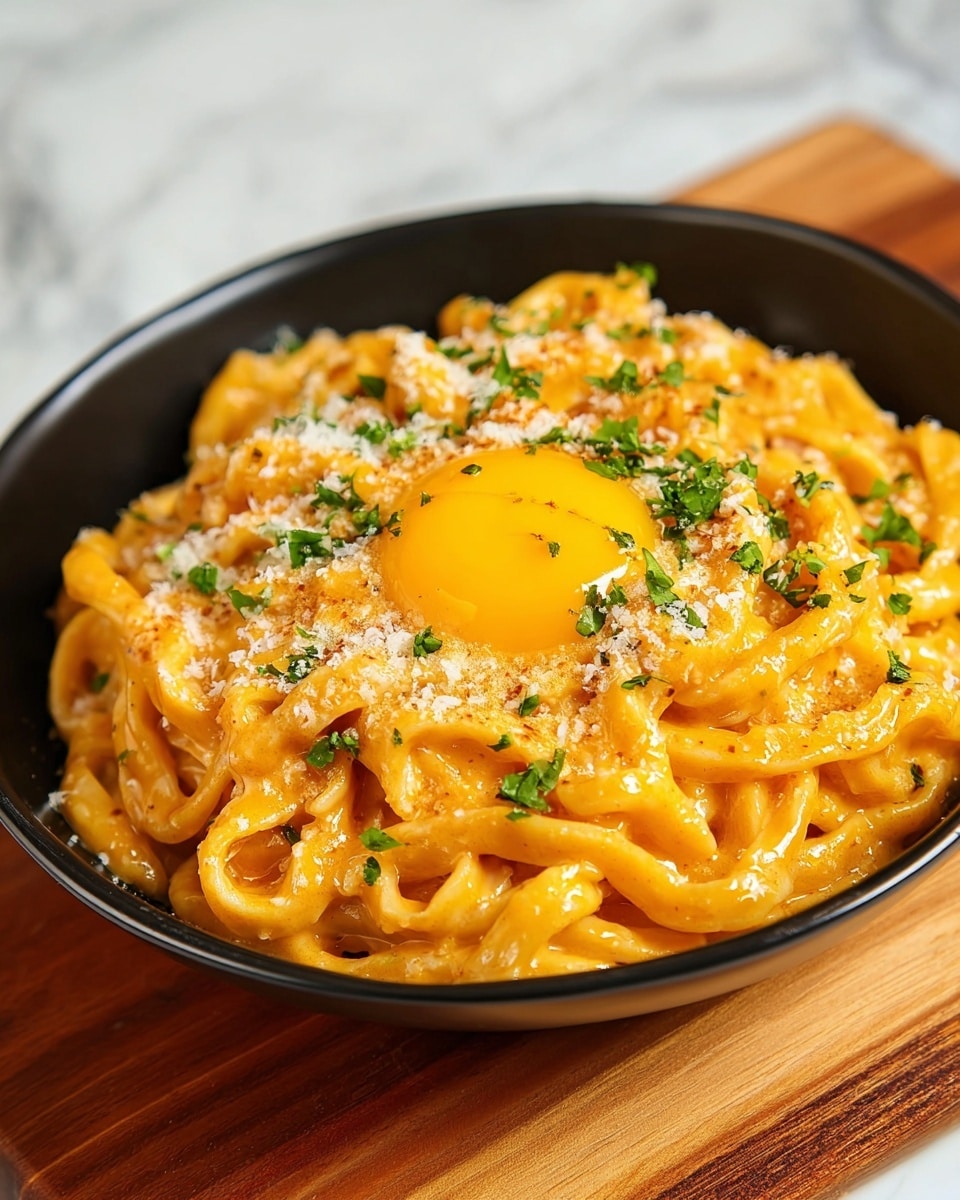
- Step 6: Transfer the noodles to a bowl. Top with grated parmesan cheese, chopped green onion, and an optional egg yolk. Serve hot and enjoy!
Tips & Variations
- For extra richness, stir the egg yolk into the noodles just before serving.
- Substitute heavy cream with coconut milk for a dairy-free variation with a subtle sweetness.
- Adjust spiciness by adding more or less gochujang and gochugaru according to your taste.
- Add sautéed vegetables like mushrooms or spinach for more texture and nutrition.
Storage
Store leftover noodles in an airtight container in the refrigerator for up to 2 days. Reheat gently in a pan over low heat, adding a splash of water or cream to loosen the sauce. Avoid microwave reheating to preserve creaminess and texture.
How to Serve
Serve this delicious recipe with your favorite sides.
FAQs
Can I use fresh udon noodles instead of frozen?
Yes, fresh udon works well. Just reduce the cooking time according to package instructions and reserve some cooking water as directed.
Is gochujang very spicy?
Gochujang has a mild to moderate heat with a slightly sweet and savory flavor. You can adjust the amount in the recipe to make it milder or spicier depending on your preference.
PrintCreamy Gochujang Udon Noodles Recipe
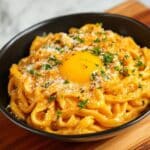
A rich and flavorful dish featuring creamy gochujang sauce tossed with tender udon noodles, enhanced by garlic, shallots, and a hint of heat from gochugaru. Finished with parmesan cheese, green onion, and an optional egg yolk for an indulgent meal with Korean and Japanese fusion influences.
- Prep Time: 10 minutes
- Cook Time: 15 minutes
- Total Time: 25 minutes
- Yield: 2 servings 1x
- Category: Stovetop
- Method: Stovetop
- Cuisine: Korean-Japanese Fusion
Ingredients
Noodles
- 2 pack frozen udon noodles
Sauce
- 3 tbsp unsalted butter
- 3 cloves garlic, minced
- 2 shallots, chopped
- 1 1/2 tbsp gochujang
- 1/2 cup heavy cream
- 1/2 cup reserved noodle water
- 2 tsp soy sauce
- 1 tsp gochugaru
Toppings
- 1 green onion, chopped (for garnish)
- Grated parmesan cheese
- Egg yolk (optional)
Instructions
- Cook Noodles: Bring a pot of water to a boil and cook frozen udon noodles according to package instructions. Once cooked, reserve 1/2 cup of the noodle water and set it aside. Drain the noodles, rinse under cold water to stop cooking, and set them aside.
- Sauté Aromatics: In a pan over medium heat, melt the unsalted butter. Add the minced garlic and chopped shallots and sauté until fragrant, about 2-3 minutes. Add the gochujang and cook for about 30 seconds to enhance its flavor.
- Prepare Sauce: Slowly pour in the heavy cream and reserved noodle water into the pan. Add soy sauce and gochugaru, stirring well to combine. Bring the sauce to a simmer and let it cook for a few minutes until it thickens slightly.
- Toss Noodles in Sauce: Add the cooked udon noodles to the pan and toss them thoroughly to coat with the creamy gochujang sauce evenly.
- Serve: Transfer the coated noodles to serving bowls. Top with grated parmesan cheese, chopped green onion, and place an egg yolk on top if using. Serve hot and enjoy your creamy, spicy udon dish.
Notes
- Reserving the noodle water helps to adjust the sauce’s consistency perfectly.
- Rinsing the noodles after boiling prevents them from becoming mushy.
- The egg yolk adds richness but is optional.
- Adjust the amount of gochujang and gochugaru to control spiciness.
- Use unsalted butter to control sodium levels in the dish.
Keywords: Gochujang udon, creamy noodles, Korean noodles, udon recipe, spicy cream sauce, easy noodle dish